How Pet Urine Destroys Artificial Turf
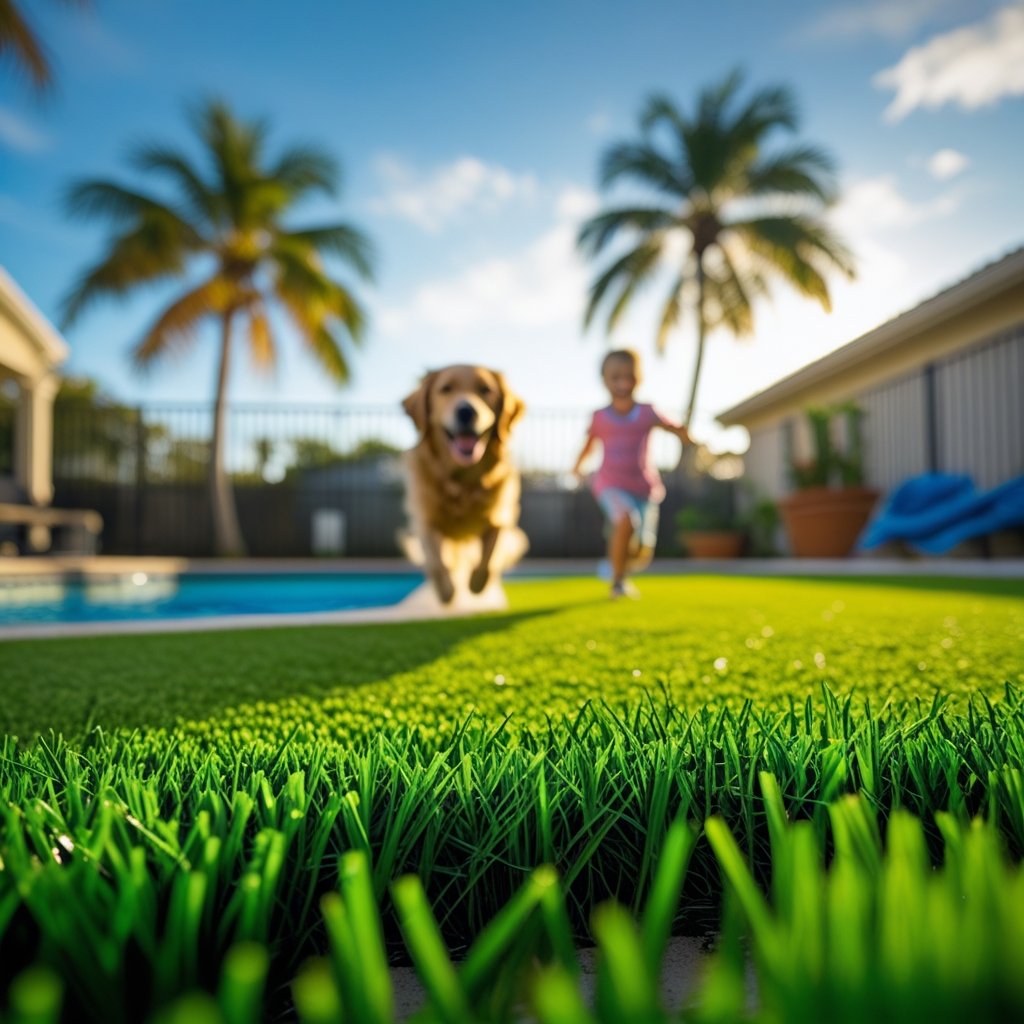
Artificial turf is one of the most popular backyard solutions for dog owners in South Florida. No mud, no brown spots, no dirt tracked into the house. But there is a problem that almost every pet owner encounters within the first few months: the smell. That unmistakable ammonia-like odor that gets worse in the heat and never seems to go away no matter how much you rinse.
The reason the smell persists is not a failure of your turf or your cleaning efforts. It is chemistry. Pet urine undergoes a specific degradation process on synthetic surfaces that makes it uniquely resistant to water, soap, and most consumer cleaning products. Understanding this chemistry is the key to understanding why professional enzyme-based treatment is the only permanent solution.
The Chemistry of Pet Urine on Synthetic Fibers
When a dog urinates on artificial turf, the liquid passes through the turf fibers and into the infill layer below. In the first few hours, the urine is in its liquid form and contains urea, urobilin, creatinine, and various salts and hormones. At this stage, it is relatively easy to rinse away with water.
But here is where the problem begins. As the urine dries, the urea undergoes a chemical transformation. Bacteria in the environment break down urea into ammonia, which is what produces that sharp, pungent smell you notice on hot days. More importantly, the uric acid component of the urine crystallizes as it dries, forming tiny, rock-hard crystals that bond to the synthetic fibers and infill granules.
These uric acid crystals are the root of the problem. They are virtually insoluble in water. They resist soap, vinegar, baking soda, and most consumer cleaning products. And they have a particularly insidious property: they reactivate when exposed to moisture. Every time it rains, every time you rinse the turf, every time humidity rises, those crystals release a fresh burst of ammonia and odor compounds.
A single dog urinating on the same turf area daily can deposit enough uric acid crystals in 30 days to create a persistent odor problem that no amount of water will resolve. In South Florida's heat and humidity, this timeline accelerates significantly.
Why Uric Acid Crystals Are So Persistent
Uric acid crystals are chemically stable compounds that resist breakdown through normal cleaning methods. Here is why they are so difficult to remove:
- Water insolubility: Unlike most organic compounds, uric acid crystals do not dissolve in water at any temperature. Rinsing with a garden hose, even at full pressure, passes water over and around the crystals without breaking them down. The crystals remain bonded to the turf fibers exactly where they formed.
- Chemical resistance: Most household cleaners are designed to tackle grease, soap scum, or general grime. They are not formulated to break the molecular bonds in uric acid crystals. Bleach, ammonia-based cleaners, and general disinfectants may mask the odor temporarily but leave the crystals completely intact.
- Reactivation cycle: When moisture contacts uric acid crystals, it triggers a partial dissolution that releases ammonia gas and other odor compounds. This is why the smell always seems worse after rain or during high humidity. The crystals are not gone. They are continuously cycling between dormant and active states.
- Accumulation over time: Each new deposit of urine adds another layer of crystals. After months of pet use, the infill layer can contain thousands of microscopic crystal deposits, each one independently producing odor whenever conditions activate it.
Bacterial Growth and Health Risks
Uric acid crystals create more than just an odor problem. They establish an environment that promotes aggressive bacterial growth, which carries genuine health risks for your family and pets.
The combination of uric acid, residual moisture, and South Florida's heat creates a perfect incubation environment for bacteria. Common species that colonize pet-use turf include:
- E. coli: Present in animal waste, E. coli thrives in the warm, nitrogen-rich environment created by urine deposits. It can survive in turf infill for weeks and poses risks of gastrointestinal illness, particularly for children who play on the surface.
- Staphylococcus: Staph bacteria readily colonize contaminated turf and can cause skin infections through direct contact, especially through small cuts or abrasions common during outdoor play.
- Salmonella: While more commonly associated with food contamination, Salmonella can persist in outdoor environments contaminated with animal waste and is particularly dangerous for young children and immunocompromised individuals.
- Leptospira: This bacterium, which causes leptospirosis in both dogs and humans, can be present in the urine of infected animals and survive in moist environments for weeks. It is a genuine health concern in South Florida where wildlife also uses outdoor turf areas.
Beyond bacteria, the moist, nutrient-rich environment also supports mold growth. Black mold in particular can establish colonies in the infill layer, releasing spores that become airborne when the turf surface is disturbed by foot traffic or play.
Why Water Alone Does Not Work
It is worth emphasizing this point because it is the most common misconception among turf owners: water cannot solve a uric acid problem. Here is what happens when you rinse pet-contaminated turf with a hose:
- The water passes through the turf fibers and contacts the infill layer.
- Loose debris and some surface-level bacteria are washed away.
- The water activates dormant uric acid crystals, temporarily increasing the ammonia smell.
- Some dissolved urine compounds are flushed through, giving the impression of cleaning.
- The uric acid crystals remain exactly where they were, completely unaffected.
- Within hours, the smell returns as bacteria resume metabolizing the remaining organic matter.
This cycle repeats every time you rinse. Some homeowners escalate to pressure washing, which can actually make things worse by driving contaminants deeper into the infill and potentially damaging turf fibers and backing material. Others try pouring vinegar or baking soda solutions on the turf, which provides a brief pH change that temporarily reduces odor but has zero effect on the uric acid crystals themselves.
Between professional visits, H₂O₂-based cleaners such as TurfMist can knock down odors from individual fresh accidents. Hydrogen peroxide oxidizes uric acid through a different mechanism than enzymes — it does not require live bacteria and remains active in high heat and humidity, which matters in South Florida summers. It is a spot-treatment tool, not a substitute for the deep enzymatic extraction described below, but it pairs well with the long-term treatment plan.
How Enzyme-Based pet odor Treatment Works
The only proven method for permanently eliminating uric acid crystals is enzymatic breakdown. Our Pet Odor Treatment uses a specialized blend of enzymes that target and disassemble uric acid at the molecular level. Here is how the process works:
Enzymes are biological catalysts, proteins that accelerate specific chemical reactions. The enzymes in our pet odor treatment are specifically selected to break the molecular bonds in uric acid crystals, converting them into carbon dioxide and water, both of which evaporate harmlessly. This is not masking. It is molecular destruction of the odor source.
The professional treatment process includes several steps:
- Deep extraction first: Before enzyme application, we perform a full Deep Extraction Cleaning to remove loose debris, bacteria, and surface-level contaminants. This ensures the enzyme treatment can reach the uric acid crystals directly without interference from other organic matter.
- Enzyme saturation: The pet odor solution is applied at saturation levels, meaning it penetrates the full depth of the infill layer and contacts every crystal deposit. Consumer enzyme products often fail because they are applied in insufficient quantities to reach all contaminated areas.
- Dwell time: Enzymes need time to work. Our treatment includes a controlled dwell period where the enzymes actively break down uric acid crystals throughout the infill layer. This is a biological process that cannot be rushed.
- antimicrobial sanitization follow-up: After the enzyme treatment, we apply Antimicrobial Sanitization to eliminate the bacterial colonies that were feeding on the uric acid. Removing the crystals without killing the bacteria would leave an active biological contamination that quickly produces new odor compounds from other organic sources.
After a complete pet odor treatment, most clients report that their turf smells completely neutral for the first time since they got their pets. The difference between enzyme treatment and every other method they have tried is not subtle. It is absolute.
Prevention Tips and Maintenance Schedule for Pet Owners
Once your turf has been professionally treated, the right maintenance routine can dramatically extend the time between professional cleanings and keep odor from returning. Here is what we recommend for South Florida pet owners:
Daily
- Pick up solid waste immediately. The longer fecal matter sits on turf, the more bacteria it introduces.
- If possible, rinse the area where your pet urinates most frequently with a garden hose. This will not remove uric acid, but it will dilute fresh urine before it dries and crystallizes.
Weekly
- Give the entire turf surface a thorough rinse with a hose. Focus on areas with the heaviest pet use.
- Brush high-traffic areas with a stiff-bristled broom to keep fibers upright and prevent matting.
Every 2-3 Months
- Schedule a professional Pet Odor Treatment. For households with one or two medium-sized dogs, every 3 months is typically sufficient. For multiple dogs or larger breeds, every 2 months is recommended.
Every 6 Months
- Full professional service including deep extraction cleaning, antimicrobial sanitization, pet odor treatment, and infill inspection. Our Deep Turf Cleaning plan, from $699 (covering the first 400 sq ft), covers all of these components in a single visit.
Additional Tips
- Designate a pet area: If your turf layout allows it, train your pet to use a specific section. Concentrating use in one area makes maintenance more manageable and reduces the total area that needs professional treatment.
- Avoid DIY enzyme products from big-box stores: Consumer enzyme cleaners are formulated for indoor surfaces like carpet and upholstery. They lack the concentration and penetration capability needed for outdoor turf infill. Professional-grade enzymes are significantly more potent and are applied with equipment that ensures full infill saturation.
- Never use bleach: Bleach will kill surface bacteria temporarily but does nothing to uric acid crystals. Worse, it can discolor turf fibers and break down the backing material, shortening the lifespan of your entire turf system.
- Consider the South Florida factor: Our heat and humidity accelerate every part of this problem. Urine dries and crystallizes faster, bacteria reproduce faster, and odors are amplified by the heat. Maintenance schedules that might work in a cooler, drier climate need to be compressed for South Florida conditions.
Artificial turf and dogs can coexist beautifully. Thousands of South Florida families prove it every day. The key is understanding that pet urine creates a specific chemical problem that requires a specific chemical solution. Enzyme-based professional treatment is that solution, and with the right maintenance schedule, your turf can stay clean, safe, and odor-free year-round.
Ready for Pristine Turf?
Eliminate pet odors permanently with our pet odor enzyme treatment. Get a free, no-obligation quote for your South Florida property. We service all of Broward, Palm Beach, and Miami-Dade counties.
Get Your Free Quote