Hurricane Season Turf Recovery Guide
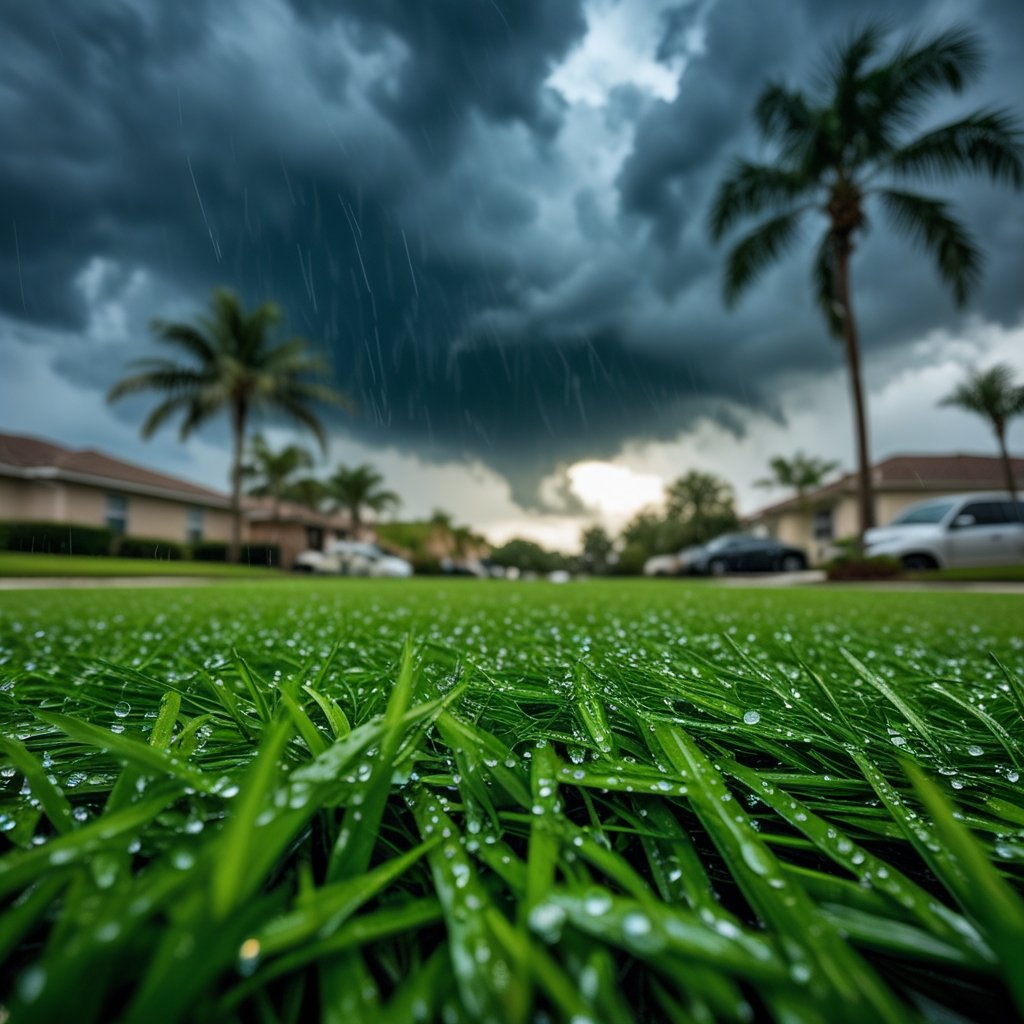
Hurricane season in South Florida runs from June 1 through November 30, and every property owner with artificial turf needs a recovery plan. Even a tropical storm can deposit enough debris, standing water, and contaminants onto your turf to create serious health and maintenance issues that persist for months if not addressed promptly.
This guide covers everything you need to know about inspecting, cleaning, and restoring your artificial turf after a hurricane or major storm event. Whether you experienced a direct hit or just the outer bands, the steps below will help you assess the damage and take the right action.
What Hurricanes Do to Artificial Turf
Artificial turf is remarkably durable. It can withstand sustained winds of 100+ mph without tearing loose in most properly installed systems. But the real damage from hurricanes is not the wind itself. It is what the wind and water carry onto your turf surface.
- Storm surge and flooding: Floodwater in South Florida is never clean. It carries sewage overflow, agricultural runoff, petroleum products, and dissolved chemicals from every surface it crosses. When floodwater sits on your turf for even a few hours, these contaminants soak into the infill layer and become trapped in the turf backing.
- Debris accumulation: Branches, roofing material, fence panels, landscape debris, and shattered glass all end up embedded in turf surfaces after a major storm. Some debris is obvious. Other contamination, like fine sediment, fiberglass insulation particles, or dissolved chemical residue, is invisible but equally problematic.
- Infill displacement: Heavy rain and flooding can wash infill material out of position, creating bare spots, uneven surfaces, and compromised drainage. A turf surface that drains properly before a hurricane may develop persistent standing water problems afterward due to infill redistribution.
- Biological contamination: Warm, standing water creates an immediate breeding ground for bacteria, mold, and algae. Post-hurricane, these organisms can colonize your turf within 24 to 48 hours, especially in South Florida's heat.
Post-Hurricane Inspection Checklist
Once conditions are safe to be outside, perform a systematic inspection of your turf before anyone walks on it, especially children or pets. Here is what to check:
- Visual scan for hazards: Walk the perimeter first. Look for nails, glass, metal fragments, or any sharp debris that could cause injury. Do not walk on the turf until you have confirmed it is free of hazards.
- Check for standing water: Note any areas where water is pooling rather than draining. This indicates infill displacement or drainage system blockage that needs professional attention.
- Inspect turf edges and seams: High winds and water flow can lift turf edges or separate seams. Check all perimeter edges, particularly around borders and hardscape transitions.
- Assess infill condition: Look for areas where infill has been washed away or deposited unevenly. Bare spots in the infill compromise the turf's structure and drainage capacity.
- Smell test: A strong sewage, chemical, or rotting odor indicates biological or chemical contamination that requires professional remediation, not just a rinse.
- Document everything: Take photographs and video of all damage before any cleanup begins. This documentation is essential for insurance claims.
Never allow children or pets onto turf that has been exposed to floodwater until it has been professionally sanitized. Floodwater contamination can include raw sewage, E. coli, and hazardous chemicals that pose serious health risks on contact.
Contaminant Risks After a Hurricane
The contaminants deposited by hurricane flooding are more dangerous than most homeowners realize. South Florida's infrastructure, combined with the region's proximity to agricultural operations and industrial zones, means floodwater can carry a wide range of hazardous materials:
- Sewage and fecal matter: Municipal sewer systems regularly overflow during hurricanes. Raw sewage carries E. coli, Salmonella, Hepatitis A, and other pathogens that can survive in turf infill for weeks.
- Petroleum products: Gasoline, motor oil, and hydraulic fluids from flooded vehicles and storage facilities are common contaminants. These can break down turf backing materials and are toxic to pets.
- Agricultural chemicals: In areas near the Everglades or agricultural zones, floodwater can carry pesticides, herbicides, and fertilizer runoff that are hazardous to human and animal health.
- Organic decay: Plant matter, dead animals, and other organic material deposited by floodwater begin decomposing rapidly in South Florida's heat, producing bacterial colonies and foul odors.
Professional Recovery Process
Post-hurricane turf recovery is not a DIY job. The contamination risks are too significant and the equipment required goes far beyond what is available at a hardware store. Here is how our professional recovery process works:
Phase 1: Debris Removal and Hazard Clearing
We begin with careful removal of all physical debris, from large branches down to small fragments. This includes a detailed inspection for hazardous materials like glass, nails, and chemical containers. Everything is documented photographically for your insurance records.
Phase 2: Deep Extraction Cleaning
Our Deep Extraction Cleaning process uses commercial-grade equipment to flush and extract contaminated water, sediment, and dissolved pollutants from the full depth of the turf system. This is not surface rinsing. It is a thorough extraction that reaches the backing layer and drainage substrate beneath.
Phase 3: Antimicrobial Sanitization
After extraction, we apply our Antimicrobial Sanitization treatment, a hospital-grade antimicrobial application that eliminates 99.9% of bacteria, mold spores, and pathogens. This step is critical after any flood event. Without proper sanitization, biological contaminants will continue to multiply in the warm, moist environment of your turf's infill layer.
Phase 4: Infill Restoration
We inspect the infill layer for displacement, compaction, and contamination. Where infill has been washed out, we replace it with fresh material. Where it has compacted, we decompact and redistribute it to restore proper drainage and surface consistency.
Phase 5: Final Inspection and Documentation
A complete post-recovery inspection ensures every area of your turf meets our standards. We provide before-and-after documentation that you can submit with your insurance claim.
Preventive Measures Before Hurricane Season
The best hurricane recovery starts with preparation. Here are steps you can take before storm season to minimize damage and speed up recovery:
- Schedule a pre-season deep cleaning: A thorough Deep Extraction Cleaning in May clears out accumulated contaminants and ensures your drainage system is functioning at peak capacity before the heavy rains begin.
- Inspect and reinforce edges: Check that all perimeter edging is secure and properly anchored. Loose edges are more likely to lift in high winds and allow water intrusion beneath the turf.
- Clear surrounding landscape: Trim trees and shrubs near the turf surface. Loose branches are the most common source of debris damage during storms.
- Document your turf's condition: Take detailed photos and video of your turf in good condition before hurricane season. This pre-storm documentation is invaluable for insurance purposes.
- Know your coverage: Review your homeowner's insurance policy to understand what turf-related damage and cleaning is covered. Many policies cover storm damage restoration but require timely filing and documentation.
Insurance and Documentation Tips
Artificial turf is typically covered under the landscaping or outdoor structures portion of your homeowner's insurance policy. However, successful claims depend on proper documentation and timely action:
- Document before you clean: Always photograph and video the damage before any cleanup or restoration work begins. Insurance adjusters need to see the original condition.
- Save all receipts: Keep detailed records of every expense related to turf recovery, including professional cleaning, infill replacement, and any temporary safety measures.
- File promptly: Most policies require claims to be filed within a specific window after the storm event. Do not delay.
- Get a professional assessment: An itemized assessment from a professional turf cleaning service carries significant weight with insurance adjusters. We provide detailed reports that outline the contamination present, the recovery work performed, and the costs involved.
South Florida's hurricane season is a reality of living in this region. With proper preparation and prompt professional response, your artificial turf can survive even a major storm event and return to pristine condition. The key is acting quickly. Contamination that sits for days or weeks becomes exponentially harder and more expensive to remediate.
Ready for Pristine Turf?
Whether you need post-hurricane recovery or pre-season preparation, we are here to help. Contact us for a free assessment and quote. We service all of Broward, Palm Beach, and Miami-Dade counties.
Get Your Free Quote